Why We Live Where We Live

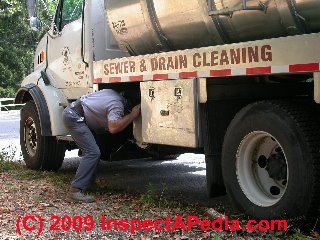
He came bounding down out of the cab of the septic truck in a much-worn jumpsuit , shaggy gray hair and a beard.  He may have been a sort of rugged hippy type when he was younger—bright working class kid with a good sense of humor and a will to try anything.  I knew more than a couple of them, so I can easily imagine nights of tavern shuffleboard and pool, and driving and laughing, and the unforeseen reality when the day job that paid enough for a moment became a full-on septic tank career.  He is now missing a few teeth, but he listened to my circumstances and answered me with energy and directness and it was clear we had a rapport.

He followed me around the corner and we hunkered down around the septic tank together to diagnose my problem, and as he was digging out the drain line he shared some political philosophy and I listened, and I made some further observations about the issues of my septic system and he listened, and as we went on like that, for some reason I began to reflect on the many reasons people live out here.

Among other unspoken ironies in the US, we fiercely insist we believe in individualism, then we spin around to generalize wildly, imagining uniformly shared values and ideals.  True enough, everyone wants to be safe and happy, and most people want to raise families and see them do well.  But what does that really tell us about anyone?  The same thing can be said about flocks of crows.

In the Romantic Vision, people move out beyond the city because we want to toss off the intensity and reconnect with nature—it is an aesthetic choice for beauty and quietude. Obviously that’s true in some cases;  it’s also true, though, that some people just don’t like being physically close to other people, and they’re edging away from the group because it’s spooky having all those others looking over their shoulders.  Some live in the country because they’ve discovered their housing dollars go farther out here, so they’re willing to make the other differences less of a hassle—they’ll put up with the commuting, for instance, the lack of city sewers and the absence of regular trash pick-up.

There is also the almost folk-belief that the country is somehow more wholesome and healthy.  My yoga teacher used to regularly rave about the air quality.  I didn’t want to correct him, mention that research consistently shows the county has much worse air pollution than the city due to the prevalence of wood-burning stoves and the lack of emissions inspection on automobiles.  As for wholesome youth, let’s not touch on the farming chemicals that go into meth labs and the amount of time it takes before the sheriffs discover what anybody is doing.

These sorts of areas can also appeal to the Gracious Retirees—wealthy, educated, open-minded graying couples walking their dogs or their grandchildren.  In the block of my community that leads up to the post office and general store there are several such couples, their homes flanking one guy who has a rusty wreck of a bread truck parked next to his house—which, by the way, is finally getting a new roof I see, after having blue tarps on it through the last several winters.  A block up toward my direction is a small house painted purple, home to yet another yoga instructor, then several properties further a yuppie couple who both work in the city who allow their dogs to roam free during the day, which often sleep in the middle of the street.  Up the road from them is a lovely place where last summer the family woke up to find in their front yard the carcass of a deer killed by a cougar earlier that morning, apparently.   Alongside their property is a very fine deep-woods lane, connecting the waterfront back to my road.  I noticed over the summer that someone has strung tarps about thirty feet off the path; they’re still there, and I’ll bet they stay there at least part of the winter.  No one I’ve met has mentioned the camp at all.

How should we read each other, then?  Is it an outlaw mentality that brings us out to the county, keeps us here–living out here so that we’re not discovered for the misanthropists we really are?

The question may better be asked about why people live in cities: the comfort of common human noise and scent, the security of believing the efforts of humankind are the most important actions on the planet, the stories we tell ourselves that prove to us that our achievements are certainly more lasting and more significant than the patterns of the crows.

As my septic tank date shoveled away, sharing with me his theory wherein the US government was responsible for 9/11, I was charmed that he felt fine telling me this.  I am a writer and English teacher who came out here from twenty-five years of city living, possibly for some of every reason I’ve mentioned thus far.  I’m not part of the slightly paranoid libertarian group a mere, few clicks away from unibomber status, though I have lived all over the map in terms of breaking rules and having serious difficulty believing that any city government has any right to tell me what to do  (“Rules and regulations, who needs them?”)  I have no children or family, though I was happy to share my home with my niece when she was in college an hour away.  And I can indeed live better here financially than in the city, though it’s more the space and the quiet and proximity to other species that has been the most tremendously healing.
Posted in Uncategorized | Leave a comment

Sign of the Shifting Season

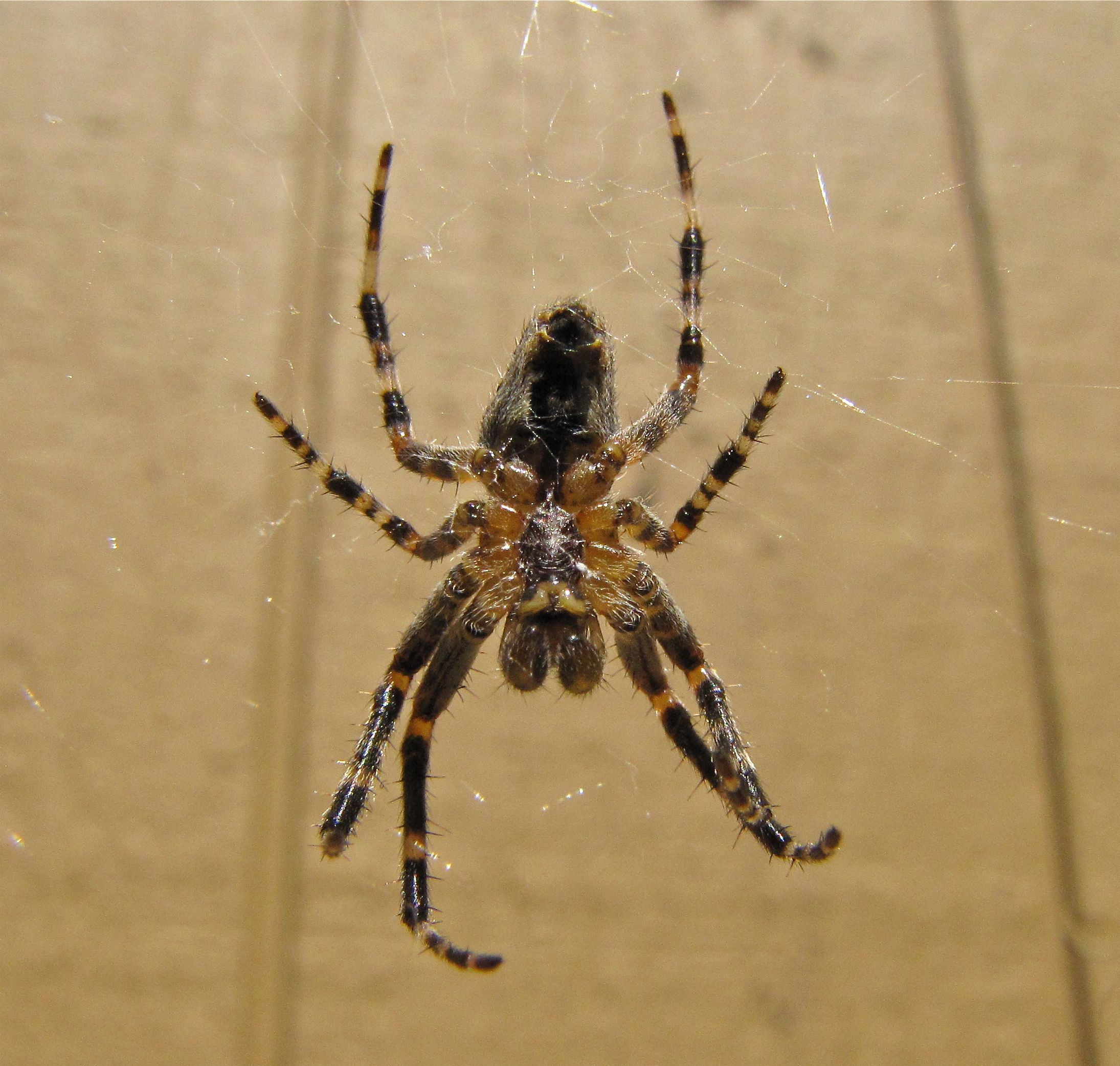
Several weeks ago I opened my door on a Sunday morning to find the upper third of it filled with a large spider web—a classic in terms of design—and in the center of the web a resident, presumably the designer, who including legs was about the size of a fifty-cent piece.  Her body itself was oval about half an inch long, with long legs directed off either end of the body, yellow and brown and striped.  She had taken over the entry like the upper half of an old farm door.

So I got a small broom I use for cobwebs and carefully removed first one lower corner of the web then one of the upper moorings, figuring that if I took the whole thing out too fast the resident would drop a line and end up somewhere on me, and I may be willing to coexist with spiders, but I’m a long way from wanting to carry them on my shoulders or wear them as a surprise accessory.  The plan worked: by the time I had the second corner unhooked she was up in the outer door frame, and I sincerely hoped that was that.

Later in the day, though, I found her still hiding in the door’s upper molding.  Her legs were drawn in and folded against each other like pairs of scissors.  She was waiting there, thinking she was invisible?  Who knows.  I just kept glancing up throughout the day as I went through the door, hoping she’d move, but she didn’t.

This time of year it always seems like the spiders are moving.  We may talk more about the first robin of spring, but out where I live, come September, and in the case this year, August, arachnids herald the change of seasons.

For a long time I thought they were trying to move indoors because it the temperatures were dropping outside.  Research tells me this isn’t the case at all:  apparently they’re more visible because they’ve matured, they’re more capable.  This is their runway moment, if you will.  Spiders on display.  At least that’s what the research says.

I came home in the early evening, and further evidence of the shift in seasons, it was dusk, and I had forgotten to leave on the porch light.  Luckily I had enough presence of mind to stop before I opened the door.  I stepped back and opened the lock at arm’s length, then pushed the door open—then I reached in and turned the light on before going through—and yes, there she was again, though this time the web was in the upper quarter of the doorway.  It wasn’t as broad, but if I hadn’t thought first I would have caught it fully on with my head.  I swatted her down with my sweatshirt this time and then shook it out over the porch, where I figured she’d descended immediately.  Then I cleaned the rest of the webbing off the door and went inside.

The next morning, I was delighted to open the door to no spider; she was teachable.  I looked out the window to check the weather then and found a large web there, with the same, striped spider, which was perfectly fine.  I do not mind sharing my space with spiders, but I’m happier if we understand each other:  they can live on their own terms as long as they stay out of my traffic.  But then I stepped out and checked the door jamb—and there was yesterday’s spider, identical to the one in the door, again drawn up and still waiting.

The second year I lived here I stained my house over the course of several September weekends, moving ladders, dusting out soffits, and I have never been a fan of spiders, but if I had any issues with them this was the time I had to either get over it or give up:  I cannot even start to describe how many I interacted with, and how many differing types.

Thinking to make a teaching moment out of it I went off to get a field guide, only to learn that there aren’t any good noes because there are so many varieties of spiders they can’t be sensibly contained in such a guide, plus, no one is sure they have them all categorized anyway.  I did learn spiders rarely have any interest in humans, and almost never bite us.  They are apparently too busy killing and eating each other.

So the house-painting did seem to have helped whatever residual squeamishness I had.  Unlike my mother, I’ve never been spider-phobic, but I’ve never been one to embrace them.  At this point, though, I’m pleased to say I can at least accept that we live together.  Good thing, too.   This time of year on many cool nights I go to take a bath and find a single black house spider the size of a pet mouse trapped in my tub.  Initially I didn’t kill them because they were simply too big and to do so in the bathtub would be pretty disgusting, like that staple of violent films to have some incident occur in the bathroom, where we’re so vulnerable, and where the blood and guts contrast against the white tile and porcelain.  No thanks.

So I keep a yogurt cup and a symphony subscription postcard on a ledge in my bedroom, and when one of these creatures materializes in the bath I scoop it up and take it outside.  I’ve read, too, that it doesn’t do them any favors, as these are actually indoor spiders and they’ll not survive outside.  But this, I figure, is not my problem, or my spiritual fitness hasn’t moved yet to whatever that next step would be.

For the moment, I figure I’m doing as well as can be expected.  I got out one of the useless field guides and went on line and I believe I have identified this year’s spider as a European Cross variety—I love it when humans project religious symbols on the forms of things like spiders.  The one in the window continues, with a hearty diet of white moths in the evening.  I haven’t seen the one from the door jamb, and I am suspicious of the other, but I try to do as I ask them to do, mind my own business, and keep to my own side of the scientific classification.

Posted in Uncategorized | Leave a comment

Navigating 2011

So in January I started the new year firmly on the ground and clear-eyed,  joining an annual midnight burn with friends, willing to take on the dubious benefit of being single again, and things looked pretty good;

by mid-month the novelty of the new year was wearing off and being alone was getting cold.  And then word came of a friend with breast cancer, followed quickly by the death of another friend of thirty years.

So the blog shifted into neutral, then neutral got parked.  Time and efforts moved to tracking the quick changes the year kept serving up: travelling east to make contact, returning to manage memorial arrangements, pausing when possible to let it all unwind.  In late spring other unexpected shifts–the dog has sudden vision issues and my best decisions lead to her looking like a stuffed toy that has lost one of its eye buttons.  Some very large, very angry man in a parking lot either panics or attempts insurance fraud by chasing my car insisting I’d driven over his foot, calls me a hit and run, calls the police, who shrug and insist we let the insurance companies fight it out.  I leave the situation with no confidence and a case of the shakes.  The long cool spring leads to low-grade summer,  when I glance down to retrieve coffee from the cupholder on the console to glance up just before the impact against a suddenly stopped BMW–which is thrown into the car in front of it, thrown into the car in front of that.

I jump out and realize I am fine.  I walk to the side of the road and gaze over the shattered taillights and bent cars, the drivers and passengers and cell phones and firemen and police.  Then, like an unexpected hero in a disaster movie, I see a friend threading through the crowd, coming toward me with a fresh bottle of cold water.  He saw it was my car on the side of the road.  Could he help run interference with any of this?

Life rolls and spins like an old funhouse, and even when things come at you steady and fast, I do believe it is preferable to be in motion than low in a corner.

Just when I wonder yet again if people are worth the chaos, someone reaches through.

Contact–


Posted in Uncategorized | Leave a comment

December 7th, 2010

On my way back from a long meeting at work I swung into a Starbucks in an upscale shopping center. It was still mid-afternoon, and I was hoping to beat the traffic, and as I stood in line I scanned the crowd–a lot of thirty to forty-ish business men and women on breaks or in informal meetings of their own, and by the wall I saw one group of women all nicely dressed, one in a wool dress, whose head was completely bald.

“Oh–cancer survivor,” I thought, and my eye continued on.

And a few seconds after that I realized how remarkable that was, and how much an indication of progress and time; it was not long ago that a woman suffering effects from chemo would be wearing a wig or a hat or wouldn’t be out in public at all, certainly not with a group of other women who looked like they were all discussing something other than their friend’s health. She was pale, she had the waxiness around the eyes that would indicate this was a good day in a period that could get tough, but even sitting next to the wall, this woman was in full view of everyone in a very public place, and she seemed to be lost in conversation with her friends, not worrying about anyone else.   Almost as significant, I noticed that no one else in the cafe was staring at her.

I went back to the car with my coffee and headed onto the freeway, and got a call from a friend on my Bluetooth; in the middle of our modern-era electronic communication she was also scanning her computer and interrupted our conversation when she saw the news release that Elizabeth Edwards had died, at the age of 61.   So many of her actions these past six years have advanced the way we respond to cancer.  One of the reports I heard this evening quoted a friend who described when she asked Edwards how she wanted to be remembered, she said, first, as a mother who loved her children.

This is also the anniversary of the day my mother died of pancreatic cancer, twenty-four years ago.  She was fifty-eight years old.

Now for the efforts and experiences of so many, a moment to appreciate a clean breath: children who know we’ve been loved.

Posted in Uncategorized | Leave a comment

Taking It All Too Seriously

I read this article in the Washington Post the other morning: U-Md., Pulitzer winner’s friends locked in messy battle over her estate, legacy By Michael S. Rosenwald, and it tripped a familiar theme for me. Katherine Anne Porter has been dead for thirty years, and outside of some 20th Century lit courses and the state of Texas, who claims her even though she rejected them for the east coast, I’m not sure her work is even read all that much anymore.  But of course here it is: a full on legal-wrangling between the inheritors of her literary estate and the university that wants it.   Of the original players, Porter herself and the first trustee are both dead;  the original executor of her will, E Barrett Prettyman Jr., is eight-five, and now embroiled in this mess of second-string shoves and postures.

And I can’t help but wonder how much the world really does need the “the 175 linear feet of letters and literary artifacts [Porter] left to the university.”

I don’t mean to be uncharitable and I don’t begrudge any writer her literary fame, especially a woman in an era when serious women writers were treated like freaks of nature.  From what I know of Porter, too, she’d quite possibly be pleased by getting into the papers again, at this point.

I do wonder what survives as art because of its intrinsic merit, and what survives because we need a to keep a hoop rolling.


Posted in Uncategorized | 4 Comments

Before the Storm

This point in November, before everything begins to build, this is a spare and beautiful time of year. I remember the Midwest in November, dove brown and gray and dust-colored, with the black trunks of trees, branches empty against the very pale blue sky.

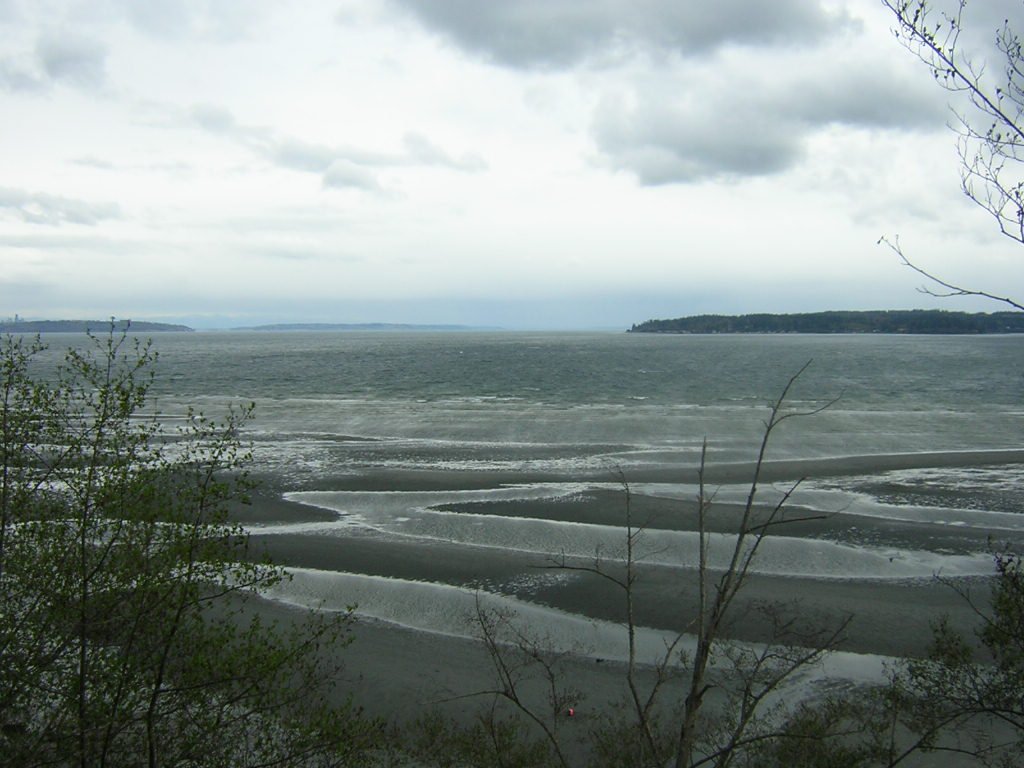
Here in the Pacific Northwest it had been raining most of the morning, and dark; driving home from running some errands the rain had stopped and light was coming from behind me, illuminating the very green cedars and hemlocks; the sky was filled with cresting, smoke-colored clouds, with a break in them—edged in white, and framing a glimpse of powder blue.

As a time of year, it’s really very quiet: wind, maybe; there can be some truly incredible storms, but just as often they can come up silently—light rain gradually increasing, snow falling with no warning.

An incredible contrast to the noise we’re about to start creating in on our side of things.

Posted in Uncategorized | Leave a comment

All Souls’

A colleague asked me if I had a blog, and I remembered that this one was in mothballs.  For any number of reasons, this seems like the perfect time to bring it back out;

Posted in Uncategorized | 2 Comments